
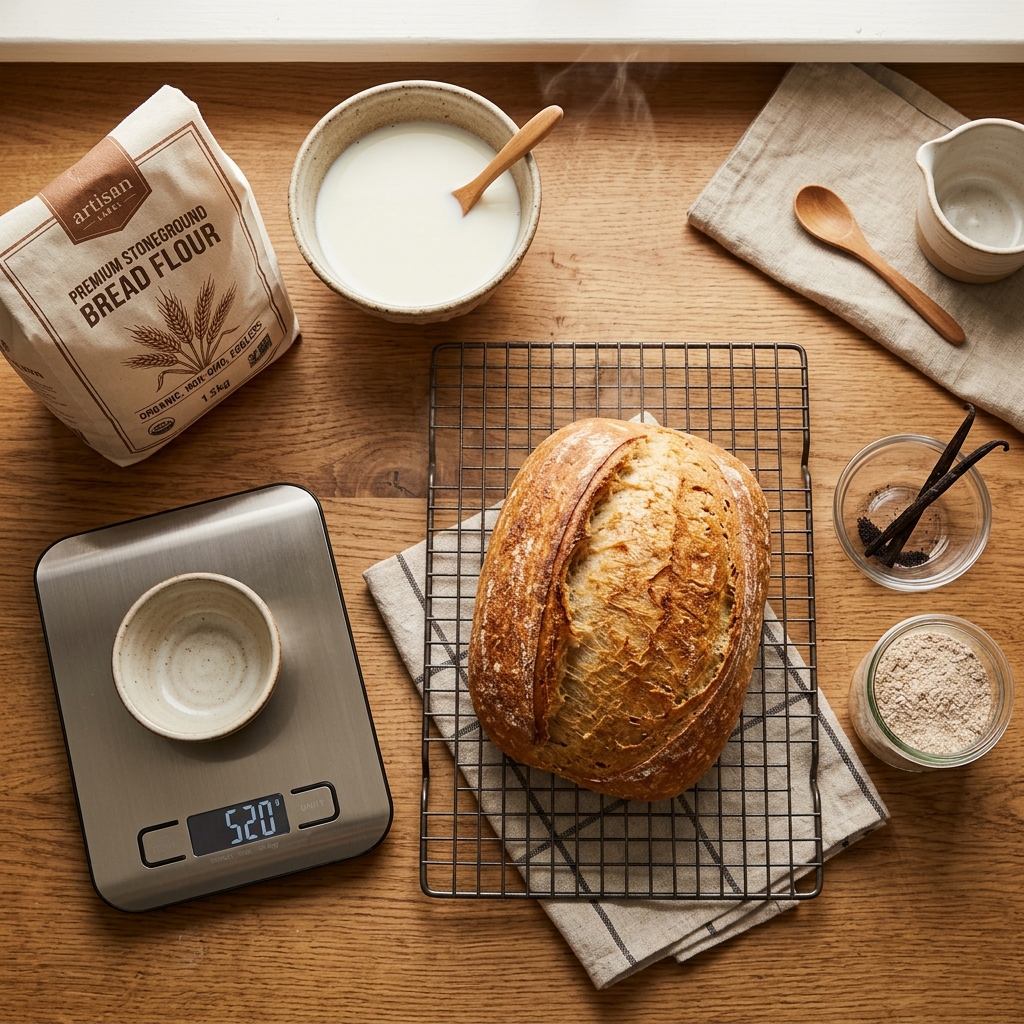
There’s something magical about the smell of fresh bread or a perfectly risen cake wafting through your home. But for many beginners, the journey from “mixing ingredients” to “masterpiece” is paved with sunken sponges, rock-hard loaves, and “what went wrong?” moments.
Baking is as much a science as it is an art. Precision matters. At EatNTreat, we’ve seen thousands of students take their first steps into the world of flour and yeast, and we’ve noticed a pattern. Most baking failures come down to a few common, easily avoidable mistakes.
In this guide, we’re breaking down the top 10 mistakes beginner bakers make and—more importantly—how you can fix them.
1. Trusting Your Oven’s Dial
Most ovens are liars. You might set the dial to 180°C, but the internal temperature could be 160°C or 200°C.
The Fix: Invest in a cheap oven thermometer. It’s the single most important tool in a baker’s arsenal. Knowing the real* temperature ensures your cakes don’t burn on the outside while staying raw inside.
2. Using Cold Eggs and Butter
Unless a recipe specifically calls for “cold” ingredients (like for pie crust), your butter and eggs should be at room temperature. Cold butter won’t cream properly with sugar, leading to a dense, heavy cake.
- The Fix: Take your ingredients out of the fridge at least 30-60 minutes before you start.
- The Fix: Use a digital kitchen scale. Measuring in grams is the only way to ensure consistency every single time.
- The Fix: Only open the door after at least 75% of the baking time has passed. Use the oven light to peek instead!
- The Fix: Use a combination of butter and flour, or high-quality parchment paper. Pay special attention to the corners!
- The Fix: Test it! Drop a teaspoon of baking powder into hot water—if it bubbles vigorously, it’s still good.
- The Fix: Use the “toothpick test” or, better yet, a digital probe thermometer. Most cakes are perfectly done at an internal temperature of 95-98°C.
- The Fix: Let your bakes cool completely on a wire rack before decorating or slicing.
3. Measuring by Volume Instead of Weight
A “cup” of flour can vary by as much as 20% depending on how tightly you pack it. This is the #1 cause of dry, crumbly bakes.
4. Opening the Oven Door Too Early
We get it—you want to see if it’s rising! But every time you open that door, the temperature drops significantly, and the sudden draft can cause a delicate cake to collapse.
5. Over-mixing the Batter
When you mix flour with liquid, you develop gluten. While gluten is great for chewy bread, too much of it makes cakes and muffins tough and “bready.”
The Fix: Mix until the flour is just* incorporated. Stop as soon as you see no more white streaks.
6. Substituting Ingredients Willy-Nilly
Baking is a chemical reaction. Swapping baking soda for baking powder, or honey for sugar, changes the pH and moisture levels of the recipe.
The Fix: Follow the recipe exactly the first few times. Once you understand the science* (which we teach in our Fundamentals Workshop), then you can experiment.
7. Not Greasing the Pan Properly
There is nothing more heartbreaking than a beautiful cake that refuses to leave the pan.
8. Using Expired Baking Powder or Soda
Leavening agents lose their potency over time. If your baking powder is six months old, it might not have the “oomph” needed to lift your cake.
9. Eyeballing the “Doneness”
Relying solely on a timer is risky because every oven is different.
10. Skipping the Cooling Process
It’s tempting to slice into a warm loaf of bread or frost a cake immediately. But the internal structure is still setting as it cools. Frosting a warm cake results in a melted mess.
Mastering the Fundamentals
Avoiding these mistakes is the difference between a “Pinterest Fail” and a professional-grade bake. At EatNTreat, our workshops are designed to help you understand the why behind every step, so you can bake with confidence every time you turn on the oven.
Ready to level up your skills? Join us in our next Beginner’s Fundamentals Workshop and let’s turn those “mistakes” into “masterpieces” together.
